
Specialised Experts in Court: Interpreting Manner Remotely - Expertise, Ethics and Evidence in Courtroom Communication
Ran Yi 1, National University of Defense Technology, China (UNSW Sydney, Australia)
Wei Zhang 2, National University of Defense Technology, China
Caimei Huang 3, National University of Defense Technology, China
Qi Zhang 4, National University of Defense Technology, China
The Journal of Specialised Translation 46 (2025), 47-70
https://doi.org/10.26034/cm.jostrans.2026.8106

ABSTRACT
Human judgment remains indispensable in interpreter-mediated courtroom proceedings, even in technology-assisted remote settings. In this study, we conceptualise court interpreters as specialised experts whose pragmatic decision-making extends beyond linguistic transfer. In particular, we argue that the accurate rendering of features, such as discourse markers, hedges, fillers, and stylistic cues, is central to procedural fairness and linguistic equity, as these features shape evidentiary nuance and interactional intent. Drawing on a 2×2 factorial experiment with 50 Mandarin–English interpreters in Australian simulated environments, we demonstrate that professional experience significantly predicts manner accuracy, while interpreting mode influences performance outcomes. Our findings underscore that pragmatic equivalence cannot be reduced to technical transmission alone. We therefore call for curriculum innovation integrating forensic questioning, interactional pragmatics, and ethically grounded reflective training in interpreter education.
KEYWORDS
Specialised translation, remote court interpreting, manner of speech, pragmatic accuracy, interpreter training and experience, linguistic equity.
1. Introduction
Imagine finding yourself in a courtroom where the language spoken is not your own, where each question and answer is filtered through an interpreter, and where the setting is not physical but digital, a remote space mediated by screens and signals. In such contexts, the fairness of legal proceedings hinges not only on what is said, but also on how it is said. This subtle but critical dimension, what we term manner accuracy, remains chronically overlooked in both theory and practice.
In Australia’s adversarial legal system, court interpreters are recognised as specialised experts, entrusted with reproducing courtroom discourse in ways that uphold procedural fairness and linguistic equity. This expert status is not merely conferred by linguistic fluency, but built upon three interconnected pillars: formal training, professional experience, and a deep understanding of pragmatic accuracy and ethics. These interpreters must faithfully and skilfully reproduce the manner of speech, discourse markers, fillers, hedges, and stylistic cues, which are instrumental in conveying interactional intent, managing power asymmetries, and preserving the illocutionary force embedded in legal questioning and testimony.
In recent years, the shift to remote interpreting, accelerated by global disruptions such as the COVID-19 pandemic, has raised new challenges. The physical and technological mediation of courtroom interactions complicates the task of preserving subtle pragmatic features. While Australian legal institutions provide commendable support through the NAATI certification framework, university-based training programs, and professional guidelines such as the AUSIT Code of Ethics (2012) and the JCDI Recommended National Standards (2022), existing pedagogical practices often lack targeted instruction on manner-related features or the power dynamics they encode.
This article, grounded in an Australia-specific empirical study, seeks to investigate how interpreters navigate these challenges in remote settings. Drawing on a 2x2 experimental design involving Mandarin-English interpreters, the study assesses how training, certification, and experience correlate with interpreters' ability to maintain manner accuracy across different interpreting modes (consecutive vs. simultaneous) and conditions (audio-only vs. audiovisual). The findings illuminate not only performance variation but also the strategic and ethical decision-making processes interpreters undertake in the face of ambiguity and constraint.
The structure of this article is as follows. Section 2 reviews relevant scholarship on pragmatic accuracy, remote interpreting, and courtroom discourse features, identifying theoretical and pedagogical gaps. Section 3 outlines the mixed-methods approach, while Sections 4 and 5 present quantitative and qualitative findings. Section 6 discusses the implications for interpreter education and policy. Ultimately, this article aims to advocate for a more holistic, practice-informed, and ethically grounded approach to interpreter training, one that recognises manner accuracy not as peripheral, but as central to justice.
2. Literature review
2.1. Pragmatic accuracy: Theories and practice
Pragmatic accuracy has long been a cornerstone of interpreting theory (Hale, 2004, 2007, 2010; Jacobsen, 2004, 2008; Stern & Liu, 2019a, 2019b; Liu, 2020). Yet it often remains under-explored in both pedagogy and empirical practice, particularly in technology-empowered specialised settings. It refers not simply to a literal transfer of meaning, but to an interpreter’s ability to render speaker intention, interpersonal stance, and communicative effect with contextual meaning and intent. As Yi (2024) articulates, pragmatic accuracy involves a nuanced interplay of socio-pragmatic norms, the illocutionary force of utterances, and interactional power dynamics within institutional discourse.
This dimension is particularly evident in legal contexts, where every utterance in court may carry strategic weight (Bradac, Hemphill, & Tardy, 1981; Gibbons, 2003; Olsson, 2008; Stern, 2011; Stygall, 2012; O’Barr, 2014; Coulthard, Johnson, & Wright, 2016; Stern et al., 2025). Drawing on Austin’s Speech Act Theory, Sperber and Wilson’s Relevance Theory, and Gricean pragmatics, recent scholarship (see Blakemore, 2002; Blakemore & Gallai, 2014; Hale & Liu, 2018; Gallai, 2022) has argued for an "operationalised" understanding of equivalence, one that respects the discursive functions of hedges, fillers, and discourse markers as markers of speaker stance or intent. In courtroom settings, the interpreter is not simply rendering the content but managing complex communicative acts with varying effects and intents across asymmetrical power relations in courtroom examinations.
Despite the positioning of theoretical models, interpreter training programs often prioritise semantic or lexical accuracy over pragmatic accuracy of interactional and stylistic nuance (Teng, Burn, & Crezee, 2018; Stern & Liu, 2019a, 2019b), particularly those embedded in forensic questioning types and testimonies in courtroom examinations. As a result, interpreters may either omit or flatten pragmatic features, leading to distortions in how testimony or questioning is perceived. In this paper, we stress that this neglect of ‘manner accuracy’ can significantly impact how witness credibility is assessed or how legal strategies unfold.
Moreover, traditional metrics of interpreter performance, such as error rate or lexical accuracy, often remain elusive for these subtle, yet powerful, interactional elements. A shift towards recognising pragmatic accuracy as crucial for evaluating professional competence in more granular frameworks, including the use of ‘discourse-sensitive rubrics’ that evaluate pragmatic features not merely as linguistic elements but as functional moves within specialised courtroom discourse.
2.2. Remote interpreting: A complex norm
The global migration to remote interpreting, catalysed by the COVID-19 pandemic, has reshaped not only logistical protocols but also the ecological architecture of interpreter-mediated legal communication (Braun, 2015, 2017, 2018, 2019, 2020). Rather than functioning as a neutral technological substitute, remote configurations reconfigure interactional dynamics, perceptual access, and turn management. As reflected in recent legal and interpreting scholarship (Legg & Song, 2021; De Boe & Vranjes, 2021; Smith et al., 2022; De Boe, Vranjes, & Salaets, 2023; Yi, 2022, 2023, 2025a, 2025b, 2026a, 2026b, 2026c; Yi et al., 2026), remote interpreting introduces sensory constraints, temporal compression, and fragmented turn-taking. These structural shifts intensify the difficulty of preserving pragmatic and stylistic features in high-stakes legal settings.
Although remote interpreting enhances accessibility and procedural continuity, it may simultaneously reduce interpreters’ access to contextual and multimodal cues such as facial expression, gesture, and prosodic nuance (Klammer & Pöchhacker, 2021; De Boe, 2023). Because manner features are deeply embedded in multimodal performance, such deprivation directly affects pragmatic calibration. Research has cautioned against treating remote modes as equivalent to in-person configurations without accounting for interpretive complexity (Braun & Taylor, 2012). Empirical studies further demonstrate that remote conditions may reduce accuracy in reproducing discourse markers, hedges, and emotional tone, particularly when visual access is restricted (Hale et al., 2022a, 2022b). Differences between audio-only and audiovisual settings have been shown to generate distinct cognitive and contextual constraints, with implications for pragmatic equivalence in emotionally or strategically complex exchanges.
Despite the increasing institutionalisation of remote modalities, interpreter education has not fully integrated mode-specific pragmatic training (Hlavac, 2013, 2016, 2021; Taibi, Ozolins, & Maximous, 2021). Guidance remains limited on how interpreters should manage fragmented interactional turns, degraded multimodal access, or heightened cognitive load while maintaining pragmatic integrity. This pedagogical lag highlights the need for empirical investigation into how remote configurations affect the rendering of manner features and how such findings might inform specialised training frameworks.
2.3. Courtroom discourse and manner features: Power, style, and ethical decision-making
Common law courtroom discourse is structurally adversarial and institutionally asymmetrical. As Gibbons (2003) observes, forensic questioning is not merely informational but strategic, designed to control narrative development and challenge credibility. Within this environment, linguistic style functions as evidentiary material rather than decorative form. Interpreters operate within this asymmetry and must navigate competing pressures of neutrality, accuracy, and procedural fairness.
Manner features, including fillers, hedges, discourse markers, intonation patterns, and emotionally charged expressions, are central to this dynamic. Existing research (Berk-Seligson, 2002, 2009, 2012, 2017; Lee, 2009, 2011, 2015; Yi, 2024, 2026) demonstrates that such features perform interactional and evaluative functions. A hesitation marker may index uncertainty or cognitive effort; a hedge may signal epistemic limitation; tonal variation may imply affective stance. In cross-examination, these cues can influence judicial perceptions of credibility (O’Barr, 2014) and reshape courtroom power relations (Erickson et al., 1978; Yi, 2022). Consequently, omission, modification, or normalisation of manner features may alter the pragmatic framing of testimony.
The complexity increases in typologically distant language pairs such as Mandarin and English. Mandarin modal particles, prosodic flattening, or indirect mitigation strategies often lack direct lexical equivalents in English. Rendering such features requires interpretive judgment that extends beyond lexical transfer to pragmatic alignment (Yi, 2025b). Professional codes, including the AUSIT Code of Ethics (2012) and the JCDI Standards (2022), emphasise impartiality and accuracy. However, they provide limited operational guidance on handling stylistic and pragmatic nuance. This normative ambiguity places interpretive responsibility on practitioners, particularly when evidentiary weight attaches to linguistic style.
From the literature, the adversarial structure of courtroom discourse and the evidentiary salience of manner features suggest that pragmatic accuracy constitutes a core dimension of specialised expertise.
2.4. Identifying gaps, aims and research questions
Building on prior research on court interpreting, pragmatic performance, and remote modalities (Berk-Seligson, 2002, 2009; Braun, 2018, 2020; Hale et al., 2022a, 2022b; De Boe, 2023), existing scholarship has substantially advanced understanding of role boundaries, semantic accuracy, and technological mediation. However, systematic investigation of pragmatic accuracy through non-content features, particularly under remote conditions, remains limited in Mandarin and English. Remote configurations introduce perceptual constraints and interactional fragmentation that may intensify the interpretive demands associated with stylistic and evidentiary nuance. At the same time, pragmatic performance remains under-operationalised in both assessment frameworks and interpreter training.
Three gaps emerge from the literature. First, there is insufficient empirical evidence linking interpreter background variables, certification, formal training, and professional experience, to performance in rendering manner features. Second, while remote interpreting has been widely examined, few studies compare specific configurations (consecutive vs. simultaneous; audio-only vs. audiovisual) in relation to pragmatic outcomes. Third, interpreters’ ethical reasoning processes when managing stylistic ambiguity remain under-documented.
To address these gaps, this study adopts a mixed-methods design combining a controlled 2×2 factorial experiment with questionnaire data from certified Mandarin–English court interpreters in Australia. The following research questions and hypotheses guide the investigation:
RQ1. How do certification, formal training, and interpreting experience influence interpreters’ ability to render manner features accurately in remote court settings?
H1. Interpreters with higher levels of formal certification, specialised legal training, and longer professional experience will demonstrate higher manner accuracy scores.RQ2. How do interpreting mode (consecutive vs. simultaneous) and modality (audio-only vs. audiovisual) affect pragmatic and stylistic rendering?
H2. Audiovisual conditions and consecutive mode will be associated with higher manner accuracy than audio-only conditions and simultaneous mode.RQ3. What types of ethical and professional judgments do interpreters make when faced with ambiguity or contextual deprivation?
H3. Interpreters will report prioritising pragmatic accuracy and evidentiary neutrality when resolving ambiguity, though reported strategies will vary according to contextual constraints.
By aligning each research question with a testable hypothesis, the study enhances analytical traceability between theoretical claims, methodological design, and statistical testing. The focus on pragmatic accuracy situates manner rendering as a measurable dimension of specialised expertise in remote legal contexts.
3. Methodology
3.1. Participants
A total of 50 professional Mandarin-English interpreters participated in this study. Participants were selected based on three main criteria: 1) active experience in legal interpreting (minimum 2 year), 2) valid NAATI certification at Certified Provisional or Certified Interpreter level, and 3) prior exposure to remote interpreting. Table 1 presents the participant demographics.
| Variable | Category / Statistic | Value |
|---|---|---|
| Gender | Female | 45 |
| Male | 5 | |
| Age (years) | Mean (SD) | 38.6 (9.2) |
| Professional experience (years) | Range | 2–21 |
| Mean (SD) | 8.4 (4.7) | |
| Educational qualification | Postgraduate (Interpreting/Translation) | 43 |
| Undergraduate only | 7 | |
| Certification level | Certified Interpreter (CI) | 48 |
| Certified Provisional Interpreter (CPI) | 2 |
Table 1. Participant Demographics (N = 50).
3.2. Research design and procedures
The study adopted a 2 (mode: consecutive vs. simultaneous) × 2 (condition: audio-only vs. audiovisual) between-subjects factorial design. Participants were randomly assigned to one of four experimental cells:
A1: Consecutive, Audio-only
A2: Consecutive, Audiovisual
B1: Simultaneous, Audio-only
B2: Simultaneous, Audiovisual
Each interpreter completed only one mode and one condition. This between-subjects structure eliminated carryover effects and enabled controlled comparison of interaction effects between mode and condition.
The interpreting experiment was conducted remotely via Zoom to replicate contemporary remote courtroom configurations. Participants were instructed to perform as they would in professional practice.
The stimulus materials were drawn from a prior Australian Research Council project (ethics approved) and used with permission. The simulated trial featured a Mandarin-speaking accused in an Australian drug trafficking case. Court personnel (judge, defence counsel, prosecutor) were portrayed by professional actors using Australian English. The defendant responded in Mandarin. Table 2 shows the corpus overview.
| Domain | Variable | Value |
|---|---|---|
| Script structure | Total speaking turns | 50 |
| Examination-in-chief turns | 24 | |
| Cross-examination turns | 26 | |
| Mean words per turn (SD) | 20.86 (9.26) | |
| Performance duration | Simultaneous mode (per participant) | 15–20 minutes |
| Consecutive mode (per participant) | 40–45 minutes | |
| Mean recorded minutes per participant (SD) | 65.0 (4.67) | |
| Total recorded minutes (all participants) | 3,250 | |
| Transcription output | Mean words per participant (SD) | 2,050 (131) |
| Total transcribed words | 102,500 |
Table 2. Corpus Overview.
3.3. Measures and scoring procedures
Manner Accuracy and Interpreter Background. To examine the relationship between interpreter background and pragmatic performance, manner accuracy scores derived from the experimental tasks were analysed in relation to certification level, formal training background, and years of professional experience. Performance was based on each participant’s recorded interpreting output and corresponding verbatim transcript produced during the simulated courtroom proceedings. These outputs constituted the primary unit of analysis for feature-level coding and subsequent statistical modelling.
Operationalisation of Manner Features. Manner accuracy was operationalised through ten analytically defined sub-features situated within two functionally distinct domains reflecting courtroom discourse structure. The first domain, discourse management, comprised English discourse markers in counsel questioning and Mandarin particle markers in defendant responses. Discourse markers (e.g., “so,” “now,” “well”) were operationally defined as connective or stance-marking items structuring argumentative progression, signalling inferential linkage, or foregrounding evidentiary focus. Mandarin particles (e.g., “啊 a,” “吧 ba,” “呢 ne”) were defined as sentence-final or intra-clausal elements indexing epistemic stance, mitigation, emphasis, or affective positioning. Each instance was coded only when it performed a pragmatic function relevant to evidentiary framing.
The second domain, stylistic rendering, included fillers, hedges, emotionally charged or vulgar expressions, and register shifts such as politeness modulation. Fillers (e.g., “uh,” “um”) were coded when they signalled hesitation or cognitive processing rather than turn-holding noise. Hedges (e.g., “maybe,” “I think,” modal verbs expressing epistemic limitation) were operationalised as linguistic devices attenuating commitment to propositional content. Emotional or vulgar expressions were defined as lexical items carrying evaluative or affective force beyond neutral description. Register shifts were coded where politeness level, mitigation strategy, or honorific modulation altered interpersonal stance relative to the source utterance. These elements were coded as markers of epistemic positioning, affective stance, and interpersonal alignment, all of which may carry evidentiary implications in adversarial proceedings.
Scoring Framework and Aggregation. Interpreter performance was evaluated using a combined point-based, criterion-referenced framework. Each annotated feature was assessed using a three-level rubric: accurate (full preservation of pragmatic force and evidentiary relevance), partial (semantic transfer with attenuated pragmatic force), and omitted/distorted (feature absent, neutralised, or functionally altered).
Coding focused on discursive function. For instance, a Mandarin epistemic hedge such as “我觉得” (“I think”) was coded as accurate when equivalent epistemic marking was retained in English, partial when rendered declaratively without hedging force, and omitted when removed. Likewise, an English discourse marker such as “so” signalling argumentative consequence was coded as distorted if translated as a neutral sequencing device lacking inferential value.
Two trained raters independently evaluated all outputs using audio recordings and transcripts (Cohen’s κ = 0.89). Disagreements were resolved through adjudication based on rubric criteria. Feature-level scores were weighted, summed, and normalised by total feature opportunities to generate composite manner accuracy indices. The dataset comprised over 45,000 individual feature-level coding decisions.
Statistical Analysis. Statistical modelling proceeded in two stages. A two-way between-subjects ANOVA tested the main and interaction effects of interpreting mode and technical condition on composite manner accuracy scores. A between-subjects design was appropriate because each participant was assigned to a single experimental cell and contributed one set of performance data. The predictive contribution of interpreter background variables was examined using correlational analyses and multiple regression. Certification level, training background, and years of professional experience were entered as independent variables to assess their individual and combined associations with manner accuracy while controlling for experimental condition.
4. Results
4.1. Results for RQ1: Interpreter background and manner accuracy
Associations between interpreter background variables and manner accuracy were examined using Spearman’s rho (for years of experience) and Pearson correlations (for certification level and training background). Correlation coefficients are reported in Table 3.
| Predictor | Lawyer Questions (r) | Defendant Responses (r) |
|---|---|---|
Years of experience (Spearman’s ρ) |
.375* | .444* |
Academic qualification (Pearson r) |
.125 | — |
| Specialised training (Pearson r) | .144 | — |
| Certification level (Pearson r) | .004 | .076 |
Table 3. Correlations Tests (N = 50).
* p < .05
As shown in Table 3, a significant positive association was observed between years of professional experience and manner accuracy for lawyer questions and defendant responses. No significant associations were found between educational attainment, specialised training, or certification level and manner accuracy.
Qualitative responses were broadly consistent with the quantitative pattern. More experienced interpreters described heightened awareness of manner features as communicative signals. A Certified Interpreter (CI) with 12 years of court experience noted: “The way someone says something, ‘um’, ‘well’, or even a sigh, can tell you whether they’re unsure, scared, or trying to buy time. we always try to keep those in unless they interfere with clarity.”
By contrast, less experienced or provisionally certified interpreters expressed uncertainty about the relevance of such features. A Certified Provisional Interpreter (CPI) stated: “Honestly, we left out a lot of the ‘likes’ and ‘uhs’ because we weren’t sure if they mattered. we focused on getting the main message right.”
These accounts indicate that experience is associated not only with performance outcomes but also with greater metacognitive sensitivity to pragmatic and interactional cues.
4.2. Results for RQ2: Mode and condition effects
A two-way between-subjects ANOVA was conducted to examine the effects of interpreting mode (consecutive vs. simultaneous) and technical condition (audio-only vs. audiovisual) on composite manner accuracy. The ANOVA results are presented in Table 4.
| Source | SS | df | MS | F | p | Partial η² |
|---|---|---|---|---|---|---|
| Mode | 0.028 | 1 | 0.028 | 9.78 | .003 | .175 |
| Condition | 0.018 | 1 | 0.018 | 6.24 | .016 | .119 |
| Mode × Condition | 0.011 | 1 | 0.011 | 3.91 | .054 | .078 |
| Error | 0.132 | 46 | 0.003 |
Table 4. Mode and Condition Effects.
As shown in Table 3, the main effect of mode was statistically significant, indicating higher manner accuracy in consecutive interpreting than in simultaneous interpreting. The main effect of condition was not statistically significant. The interaction between mode and condition did not reach statistical significance.
Post-experiment questionnaire responses indicated that several participants in the audio-only condition reported improved concentration due to the absence of visual distraction, particularly during rapid cross-examination. One interpreter in the simultaneous audio-only group noted: “Without seeing the speaker, we can focus on the utterances, content or style, without getting distracted by moving images. This is particularly helpful when interpreting simultaneously.”
4.3. Results for RQ3: Interpreters’ attitudes and decision-making on manner features
Figure 1 illustrates interpreters’ relative endorsement of the three rendering strategies tested through three 5-point Likert-scale statements.
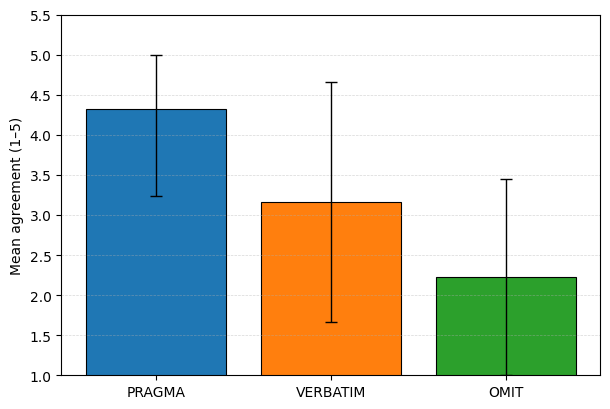
Figure 1. Mean Agreement Scores for Rendering Strategies.
Note. Error bars represent ±1 standard deviation. Scale range: 1 (Strongly disagree) to 5 (Strongly agree).
As shown in Figure 1, agreement was strongest for pragmatic equivalence (M = 4.32, SD = 1.08), moderate for literal rendering (M = 3.16, SD = 1.50), and lowest for omission (M = 2.22, SD = 1.23), indicating a clear hierarchical preference pattern. The three-item scale showed high internal consistency (Cronbach’s Alpha = .909), supporting its reliability.
The open-ended responses (n = 50) yielded rich qualitative insights. Eighty-two percent of participants stated that they would actively reproduce discourse markers and stylistic features in their interpreting. Their reasons clustered around three dominant themes:
Accuracy and completeness (30%, n = 15),
Relevance to courtroom perception or outcome (28%, n = 14), and
Adherence to professional ethics and codes of conduct (24%, n = 12).
Only 18% (n = 9) expressed selective non-rendition strategies, often citing perceived irrelevance or cognitive efficiency as justifications for omitting elements like fillers or repetitions.
Respondents demonstrated reflective awareness of the pragmatic functions served by these features. For example, some viewed mannered hesitations as critical indicators of speaker credibility, particularly in front of a jury, while others highlighted the ethical implications of smoothing defendant speech. For example, one participant recounted: “The defendant kept saying ‘...我都说了我不记得了 (...I already told you - I don’t remember)’. we preserved both the hesitant impatience and the strong assertive tone, as the defendant was being cornered by the prosecutor, exposing inconsistencies in his previous testimony.”
Another simultaneous interpreter reported: “We omitted some features because of time constraints. These features happened in a split second. It was really challenging to capture everything in cognitively demanding mode, though we know we’re not supposed to filter.”
These written responses reflect the need to treat manner accuracy as both a discursive and professional ethics domain, not simply a technical matter of completeness or omission.
5. Discussion: Manner accuracy in remote specialised legal interpreting
5.1. RQ1. Training and experience: Anchors of pragmatic accuracy
The results indicate a consistent association between years of courtroom experience and higher manner accuracy scores. Experience emerged as the only statistically significant predictor in the regression model, whereas formal training and certification level did not show independent predictive effects within the present sample. This pattern aligns with scholarship conceptualising pragmatic accuracy as a learned, experience-sensitive skill rather than a purely intuitive competence (Hale, 2020; Stern & Liu, 2018; Liu, 2020).
Although postgraduate training and specialised modules in legal interpreting were not statistically significant predictors in the quantitative analysis, qualitative responses suggest that interpreters who reported exposure to forensic questioning or legal pragmatics demonstrated greater metacognitive awareness of discourse markers (e.g., “so”, “now”, “OK”) and hedges (e.g., “we think”, “maybe”, “sort of”). These observations should be interpreted cautiously, as they derive from self-reported background data rather than experimentally manipulated training conditions.
The findings suggest that rendering manner features is not an automatic linguistic process but a cultivated discursive competence shaped by repeated exposure to courtroom interaction. One interpreter with over 10 years of courtroom experience and postgraduate training noted: “The ‘well’ or ‘uh’ tells you the witness is stalling or being strategic, it’s not just filler. You have to replicate that.” Such reflections reinforce the view that pragmatic cues function as interactional signals embedded in institutional power structures (Gibbons, 2003).
With respect to certification, the absence of a statistically significant association should be regarded as exploratory. We also acknowledge that the sample was imbalanced (48 Certified Interpreters and 2 Certified Provisional Interpreters) and did not include non-certified practitioners. This limits the robustness of inferences regarding the predictive role of certification status. Future research incorporating a more balanced and stratified sample, including non-certified interpreters and specialist court-certified cohorts, would allow for a more rigorous evaluation of certification effects.
These findings also resonate with concerns raised by Teng, Burn, and Crezee (2018), who argue that interpreter education often prioritises lexical-semantic accuracy while under-emphasising stylistic and pragmatic dimensions of courtroom discourse. However, the present data suggest that experiential exposure may currently play a more decisive role than formal credentialing in shaping pragmatic sensitivity.
5.2. RQ2. Interpreting mode and modality: The mediation of manner
The findings demonstrate a clear mode effect: consecutive interpreting yielded significantly higher manner accuracy than simultaneous interpreting. By contrast, the technical condition (audio-only vs. audiovisual) did not exert a statistically significant independent effect, nor did it significantly interact with mode. The central explanatory factor therefore appears to lie in the temporal and cognitive characteristics of interpreting mode rather than in sensory modality alone.
The observed advantage of consecutive interpreting can plausibly be explained through cognitive load theory. Simultaneous interpreting requires concurrent listening, processing, and production, leaving limited attentional resources available for monitoring subtle pragmatic cues (Gile, 2009; Kuang & Zheng, 2022). Under such conditions, interpreters may prioritise propositional content, resulting in the attenuation or omission of manner features. Consecutive interpreting, by contrast, introduces segmentation and note-mediated reformulation, which may allow greater deliberation and retrospective adjustment of pragmatic force (Hale et al., 2023).
Interactional dynamics may also contribute to the mode effect. Consecutive mode preserves clearer turn boundaries and affords interpreters momentary control over pacing, potentially facilitating more accurate alignment with speaker stance. Simultaneous mode, particularly in remote environments, compresses temporal margins and may heighten processing demands during adversarial questioning.
Although audiovisual access yielded numerically higher means, the absence of statistical significance cautions against attributing independent explanatory power to modality. Rather, the findings suggest that mode-related processing constraints exert a more robust influence on manner accuracy than the presence or absence of visual cues.
The results support the view that pragmatic accuracy is sensitive to processing architecture. Mode operates not merely as a technical format but as a mediating structure shaping how interpreters allocate cognitive resources and manage interactional nuance in courtroom discourse.
5.3. RQ3. Professional decision: Interpreting pragmatics as an obligation
Beyond technical accuracy, this study reveals that interpreters make context-sensitive ethical decisions when faced with pragmatic ambiguity. Interview data show that many participants weighed multiple competing demands: accuracy to form, preservation of meaning and intent, institutional expectations, and professional ethics.
For instance, one interpreter chose to omit repeated “um” and “like” fillers in a defendant’s answer, noting: “we tried to reproduce everything for ethics and fairness. But when doing simultaneous interpreting, we may not have the time or cognitive capacity to note subtle fillers.” While this decision contravenes formal expectations of faithfulness, it reflects the interpreter’s genuine endeavour to uphold professional standards, rooted in concern for procedural fairness, despite mode-specific challenges.
Conversely, another participant said: “we kept the ‘um’s because we’ve seen barristers use that to push harder in cross. It’s strategic.” This comment suggests a deep institutional literacy; the interpreter understands the courtroom not just as a space of information exchange but of strategic discourse. Preserving manner becomes an act of discursive accuracy, even if it risks portraying the speaker unfavourably.
This confirms Gallai’s (2022) argument that pragmatic accuracy is not merely relevant to meaning and intent, but an ethically loaded zone. The decision to preserve or soften manner features is rarely neutral, it involves assessing legal impact, institutional norms, and ethical responsibility. As Lee (2015) has shown, codes of ethics (e.g., AUSIT) offer little operationalised guidance on untranslatable stylistic features between typological distant language combinations, leaving interpreters to make difficult decisions in real time.
6. Implications for interpreter training and professional practice
6.1. Reflective pedagogy and the development of pragmatic expertise
The first research question examined how interpreters’ background, especially their training, certification, and professional experience, correlated with their ability to reproduce manner features accurately. The results offer a clear insight: pragmatic accuracy is not simply a by-product of linguistic competence; it is cultivated through formal education, domain-specific exposure, and reflective engagement with the institutional logics of courtroom discourse.
This calls for improved interpreter training programs to embed reflective pedagogy on manner accuracy into their core curricula. It is no longer sufficient to teach students to “be accurate”, we need to teach them to ask what accuracy means when the speaker’s tone, hesitation, or register is embedded in a legal strategy during different types of courtroom examinations. Legal interpreting is about discourse mediation, and students need to be equipped to recognise, justify, and reproduce pragmatic intent across asymmetrical communicative events.
6.2. Technology-aware and modality-responsive training
The second research question examined the effects of interpreting mode and condition, consecutive vs. simultaneous, audio-only vs. audiovisual, on the rendering of manner features. The findings have profound implications for interpreter education. While many programs already teach students how to operate in different modes, few address the modes in remote settings. Training therefore should be designed with remote mode and modality-responsiveness in mind. Students are encouraged to reflect on their performance across the full range of contemporary courtroom configurations, including remote hearings with limited visual access, time-lagged communication, and reduced prosodic cues. They can learn not only to interpret, but to monitor what is absent, to infer what is implied, and to adapt their strategies accordingly.
Moreover, educators need to support students in reflecting on how each modality alters their decision-making process. What do they notice when they see a shrug versus when they only hear a pause? How do they manage uncertainty when tone is flat but content ambiguous? These are not peripheral concerns; they are foundational to producing equitable and contextually aligned interpretations in the digital courtroom.
6.3. Interprofessional collaboration and ethical scaffolding
The third research question delved into the types of ethical and professional judgments interpreters make when faced with ambiguity in manner features. Our qualitative findings show that interpreters do not merely follow rules, they weigh, reason, and act. Decisions to omit, soften, or preserve stylistic markers were often guided not by incompetence but by ethical intent, contextual reading, and professional intuition, despite operational constraints (e.g. lack of visual access, fast speech rate in simultaneous mode, etc.).
Yet, despite this reflection, interpreters also reported a lack of formal support when navigating these ethical dilemmas. Codes of ethics offer general guidance, impartiality, accuracy, confidentiality, but they offer little about how to operationalise such values when the speaker’s credibility, vulnerability, or strategic positioning is at stake. What should an interpreter do when a defendant’s stammer might be perceived as guilt? Or when a hedge could be read as evasive? These are not technical questions; they are moral ones for professionals.
Annotated transcript sessions, where legal professionals provide commentary on how manner affects their interpretation of evidence, could serve as powerful learning tools. These spaces allow interpreters to ask, not just how to render a phrase, but how it might be heard. Such collaboration shifts the paradigm from isolated accuracy to shared communicative responsibility.
In parallel, interpreter institutions and professional associations need to explore mechanisms for ethical mentoring and feedback. Rather than assessing performance solely through linguistic checklists, feedback could include pragmatic annotations from experienced interpreters who explain not only what was said, but what could have been meant, and how that meaning was constructed or lost in interaction. Reflective commentaries, peer-to-peer mentoring, and even longitudinal review of interpretive decisions across cases could create a culture where ethical agility is cultivated, not assumed. These efforts would address the current disconnect between formal guidelines and real-time demands.
7. Conclusion
Positioning professional court interpreters as specialised experts, this study set out to explore how Mandarin-English court interpreters in Australia reproduce “manner of speech” features, such as discourse markers, hedges, fillers, and speech style cues, during remote interpreting in courtroom settings. Drawing on a mixed-methods design and a 2x2 factorial experiment, the study investigated how training, experience, interpreting mode, and condition influence pragmatic accuracy and how interpreters themselves make strategic and ethical decisions under ambiguity.
Three core findings emerged. First, more experienced and formally trained interpreters demonstrated higher accuracy in rendering manner features. Their decisions were not only more consistent but also more reflective of the discursive and institutional functions of those features, particularly in adversarial examinations. Second, mode significantly shaped performance. Consecutive settings enhanced interpreters’ ability to perceive and convey subtle pragmatic cues, while simultaneous configurations often resulted in omission or flattening of these features. Third, qualitative data revealed that interpreters regularly make ethically charged decisions, often balancing accuracy with fairness and speaker’s strategic intent with institutional expectations.
This study makes several original contributions to the field of legal interpreting and interpreter education. Methodologically, it bridges quantitative and qualitative approaches to capture both performance trends and the lived reasoning behind them. The mixed-methods design, grounded in authentic courtroom simulation and real-world data, provides a rare window into the micro-decisions interpreters make under institutional constraint.
Theoretically, the study operationalises “manner accuracy” as a site of pragmatic equivalence, power negotiation, and ethical reasoning. It extends existing models of accuracy by drawing attention to how interpreters mediate not just semantic meaning but also speaker stance, strategic intention, and interactional vulnerability.
Pedagogically, it advocates for a reorientation of interpreter education, from content transmission to reflective, mode-aware, and ethically scaffolded practice. And institutionally, it calls for a deeper dialogue between interpreters and legal professionals to clarify how stylistic elements function, and are evaluated, within courtroom discourse.
As with any empirical investigation, this study is shaped by its own limitations. While the sample of 50 interpreters was diverse in training and experience, it was confined to Mandarin-English professionals within the Australian context. Findings may not generalise across all languages or legal systems, especially those with different adversarial or inquisitorial traditions.
Moreover, while the simulated courtroom materials were based on real scripts and interactions, they could not fully capture the emotional, psychological, and interpersonal dynamics of live testimony. Nor did the study measure how interpreter decisions shaped downstream legal outcomes, a gap that future interdisciplinary work could help address.
Finally, post-experiment questionnaire, while rich, were constrained by time and self-report limitations. What interpreters say they do, and what they believe they should do, may not always align with real-time cognition.
Building on the present findings, future research could adopt three key directions. First, cross-linguistic comparative studies are needed to explore how different language pairs affect the interpreter’s approach to manner accuracy. Second, legal impact studies could examine how the omission or alteration of manner features influences judicial perceptions of credibility, coherence, and intention. Such work would require collaboration across interpreting, forensic linguistics, and legal psychology. Third, longitudinal studies of interpreter decision-making, tracking how professionals develop their pragmatic sensitivity and ethical instincts over time, could inform not just training curricula but also standards of professional assessment.
This paper began with a question that was both practical and principled: ow do professional interpreters ensure that language does not become a barrier to justice, not only in what is said, but in how it is said? The answer, if there is one, lies in recognising that interpreters are not background figures in the courtroom, they are specialised experts in court, co-constructors of meaning, arbiters of institutional voice, and custodians of fairness across languages and cultures.
To treat manner features as trivial is to misunderstand the courtroom itself. Interpreters need to be trusted, and trained, not just to translate, but to interpret in the deepest sense of the word: to understand, to reflect, to respond. If interpreters are to be recognised as the specialised experts they are, we need to invest not only in their linguistic fluency but in their pragmatic literacy and their professional resilience. Only then can we claim to serve justice in all its modes, not just what is said, but how.
Acknowledgements
We thank all participants for their time and engagement, as well as colleagues and advisers for their support throughout the research process. We are also grateful to the anonymous reviewers and the Editor of this journal, Professor Łucja Biel (University of Warsaw), for their careful reading and guidance, which substantially improved the manuscript. Special thanks go to Professor Sandra Hale (UNSW Sydney), Professor Ludmila Stern (UNSW Sydney), Dr Natalie Martschuk (Griffith University), Associate Professor Miranda Lai (RMIT), and Dr Jim Hlavac (Monash University) for their intellectual generosity, insightful comments, and thoughtful feedback at different stages of the research.
Funding
This research was approved by the UNSW Human Research Ethics Committee (HC210787). Some of the experimental materials were drawn from the Australian Research Council Discovery Project (DP180100124), used with the consent of the chief investigators and participants. The research was supported by UNSW Sydney (HAL SPF02).
References
Allsop, J. L. B. (2016). Technology and the Court Practice Note (GPN-TECH). Federal Court of Australia. https://www.fedcourt.gov.au/law-and-practice/practice-documents/practice-notes/gpn-tech
Australian Human Rights Commission. (2012). Access and equity: Inquiry into the responsiveness of Australian Government services to Australia's culturally and linguistically diverse population. Retrieved October 6, 2023, from https://www.humanrights.gov.au/sites/default/files/content/legal/submissions/2012/20120224_access_equity.pdf
AUSIT. (2012). Code of Conduct. Retrieved October 31, 2022, from https://ausit.org/wp-content/uploads/2020/02/Code_Of_Ethics_Full.pdf
Austin, J. L. (1975). How to do things with words (2nd ed., J. O. Urmson & M. Sbisà, Eds.). Oxford University Press.
Berk-Seligson, S. (2002). The bilingual courtroom: Court interpreters in the judicial process. University of Chicago Press.
Berk-Seligson, S. (2009). Coerced confessions: The discourse of bilingual police interrogations. Walter de Gruyter.
Berk-Seligson, S. (2012). Linguistic issues in courtroom interpretation. In L. M. Solan & P. M. Tiersma (Eds.), The Oxford handbook of language and law (pp. 421–434). Oxford University Press.
Berk-Seligson, S. (2017). The bilingual courtroom: Court interpreters in the judicial process. University of Chicago Press.
Blakemore, D. (2002). Relevance and linguistic meaning: The semantics and pragmatics of discourse markers. Cambridge University Press.
Blakemore, D., & Gallai, F. (2014). Discourse markers in free indirect style and interpreting. Journal of Pragmatics, 60, 106-120.
Bradac, J. J., Hemphill, M. R., & Tardy, C. H. (1981). Language style on trial: Effects of 'powerful' and 'powerless' speech upon judgments of victims and villains. The Western Journal of Speech Communication, 45(4), 327–341. https://doi.org/10.1080/10570318109374054
Braun, S. (2013). Keep your distance? Remote interpreting in legal proceedings: A critical assessment of a growing practice. Interpreting, 15(2), 200-228.
Braun, S. (2015). Remote interpreting. In H. Mikkelson & R. Jourdenais (Eds.), The Routledge handbook of interpreting (pp. 352-368). Routledge.
Braun, S. (2017). What a micro-analytical investigation of additions and expansions in remote interpreting can tell us about interpreters' participation in a shared virtual space. Journal of Pragmatics, 107, 165-177. https://doi.org/10.1016/j.pragma.2016.09.011
Braun, S. (2018). Video mediated interpreting in legal settings in England: Interpreters' perceptions in their sociopolitical context. Translation and Interpreting Studies, 13(3), 393-420. https://doi.org/10.1075/tis.00022.bra
Braun, S. (2019). Technology and interpreting. In M. O'Hagan (Ed.), The Routledge handbook of translation and technology (pp. 271-282). Routledge.
Braun, S. (2020). You are just a disembodied voice really: Perceptions of video remote interpreting by legal interpreters and police officers. In H. Salaets & G. Brone (Eds.), Linking up with video: Perspectives on interpreting practice and research (pp. 47-78). Routledge.
Coulthard, M., Johnson, A., & Wright, D. (2016). An introduction to forensic linguistics: Language in evidence. Routledge.
De Boe, E., & Vranjes, J. (2021). Gaze and turn-taking management in remote dialogue interpreting. 17th International Pragmatics Conference Proceedings, p. 512. International Pragmatics Association (IPrA). Retrieved from http://hdl.handle.net/1854/LU-8695772
De Boe, E., Vranjes, J., & Salaets, H. (2023). Interactional Dynamics in Remote Interpreting: Micro-analytical Approaches. Routledge.
Erickson, B., Lind, E. A., Johnson, B. C., & O'Barr, W. O. (1978). Speech style and impression formation in a court setting: The effects of 'powerful' and 'powerless' speech. Journal of Experimental Social Psychology, 14(3), 266–279. https://doi.org/10.1016/0022-1031(78)90015-X
Federal Court of Australia. (2023). Working with interpreters (GPN-INTERP). Retrieved October 6, 2023, from https://www.fedcourt.gov.au/law-and-practice/practice-documents/practice-notes/gpn-interp
Gallai, F. (2022). Relevance theory in translation and interpreting: A cognitive-pragmatic approach. Routledge.
Gibbons, J. (2003). Forensic linguistics: An introduction to language in the justice system. Blackwell.
Grice, H. P. (1975). Logic and conversation. In P. Cole & J. L. Morgan (Eds.), Syntax and semantics (Vol. 3, pp. 41–58). Academic Press.
Gile, D. (2009). Basic concepts and models for interpreter and translator training. John Benjamins.
Hale, S. B. (2004). The discourse of court interpreting: Discourse practices of the law, the witness, and the interpreter. John Benjamins.
Hale, S. B. (2007). Community interpreting. Palgrave Macmillan.
Hale, S. B. (2010). The need to raise the bar: Court interpreters as specialised experts. In M. Coulthard & A. Johnson (Eds.), The Routledge handbook of forensic linguistics (pp. 440-454). Routledge.
Hale, S., Goodman-Delahunty, J., Martschuk, N., & Lim, J. (2022a). The effects of mode on interpreting performance in a simulated police interview. Translation and Interpreting Studies, 17, 264-286. http://dx.doi.org/10.1075/tis.19081.hal
Hale, S., Goodman-Delahunty, J., Martschuk, N., & Lim, J. (2022b). Does interpreter location make a difference? A study of remote vs face-to-face interpreting in simulated police interviews. Interpreting, 24(2), 221-253.
Hale, S., Lim, J. Martschuk, N., & Goodman-Delahunty, J. (2023). Note-taking in court interpreting: Interpreter perceptions and practices in a simulated trial. The International Journal of Translation and Interpreting Research, 15(1), 1-21. http://dx.doi.org/0.102807/ti.115201.2023.a01
Hale, S. B., & Stern, L. (2011). Interpreter quality and working conditions: Comparing Australian and international courts of justice. Judicial Officers' Bulletin, 23, 75–78.
Hlavac, J. (2013). A cross-national overview of translator and interpreter certification procedures. Translation & Interpreting: The International Journal of Translation and Interpreting Research, 5(1), 32-65.
Hlavac, J. (2016). Interpreter credentialing, testing and training in Australia: Past, contemporary and future directions. Journal of Public Service Interpreting, 6. https://doi.org/10.37536/FITISPos-IJ.2016.3.0.98
Hlavac, J. (2021). The development of community translation and interpreting in Australia: A critical overview. In Translating and interpreting in Australia and New Zealand (pp. 65-85). Routledge.
Jacobsen, B. (2004). Pragmatic meaning in court interpreting: An empirical study of additions in consecutively interpreted question-answer dialogues. International Journal of Speech, Language and the Law, 11(1), 165-169. https://doi.org/10.1558/ijsll.v11i1.165
Jacobsen, B. (2008). Interactional pragmatics and court interpreting: An analysis of face. Interpreting, 10, 128-158. https://doi.org/10.1075/intp.10.1.08JAC
Jacobsen, B. (2012). The significance of interpreting modes for question–answer dialogues in court interpreting. Interpreting, 14(2), 217-241.
Judicial Council on Cultural Diversity. (2022). Recommended national standards for working with interpreters in court and tribunals. Retrieved January 14, 2024, from https://jccd.org.au/wp-content/uploads/2022/05/JCDD-Recommended-National-Standards-for-Working-with-Interpreters-in-Courts-and-Tribunals-second-edition.pdf
Klammer, M., & Pöchhacker, F. (2021). Video remote interpreting in clinical communication: A multimodal analysis. Patient Education and Counselling, 104(12), 2867–2876. https://doi.org/10.1016/j.pec.2021.08.024
Kuang, H., & Zheng, B. (2022). Note-taking effort in video remote interpreting: Effects of speech difficulty and interpreter work experience. Perspectives, 1-21. https://doi.org/10.1080/0907676X.2022.2053730
Lee, J. (2009). Interpreting inexplicit language during courtroom examination. Applied Linguistics, 30(1), 93–114.
Lee, J. (2011). Translatability of speech style in court interpreting. International Journal of Speech, Language and the Law, 18(1), 1-33. https://doi.org/10.1558/ijsll.v18i1.1
Lee, J. (2015). Evaluation of court interpreting: A case study of metadiscourse in interpreter-mediated expert witness examinations. Interpreting, 17, 167–194. https://doi.org/10.1075/intp.17.2.02lee
Legg, M., & Song, A. (2021). The courts, the remote hearing and the pandemic: from action to reflection. UNSW Law Journal, 44(1), 126–166. https://www.unswlawjournal.unsw.edu.au/wp-content/uploads/2021/04/04-Legg-Song.pdf
Liu, X., & Hale, S. (2018). Achieving accuracy in a bilingual courtroom: The effectiveness of specialised legal interpreter training. The interpreter and translator trainer, 12(3), 299-321.
Liu, X. (2020). Pragmalinguistic challenges for trainee interpreters in achieving accuracy: An analysis of questions and their interpretation in five cross-examinations. Interpreting, 22(1), 87-116. https://doi.org/10.1075/intp.00035.liu
Morris, R. (1995). The moral dilemmas of court interpreting. Translator, 1, 25–46. https://doi.org/10.1080/13556509.1995.10798948
Morris, R. (2008). Missing stitches: An overview of judicial attitudes to interlingual interpreting in the criminal justice systems of Canada and Israel. Interpreting, 10(1), 34-64. https://doi.org/10.1075/intp.10.1.04mor
O'Barr, W. M. (2014). Linguistic evidence: Language, power, and strategy in the courtroom. Academic Press.
Olsson, J. (2008). Forensic linguistics. Continuum.
Searle, J. R. (1976). A classification of illocutionary acts. Language in Society, 5(1), 1–23.
Smith, R., Savage, R., & Emami, C. (2021). Benchmarking the Use of Audiovisual Link Technologies. Australian Government Institute of Criminology. https://www.aic.gov.au/publications/rr/rr23
Sperber, D., & Wilson, D. (1995). Relevance: Communication and cognition (2nd ed.). Blackwell.
Stern, L. (2011). Courtroom interpreting. In K. Malmkjær & K. Windle (Eds.), The Oxford handbook of translation studies (pp. 325–342). Oxford University Press.
Stern, L., & Liu, X. (2019a). Ensuring interpreting quality in legal and courtroom settings: Australian language service providers' perspectives on their role. Journal of Specialised Translation, 32(1), 90-120.
Stern, L., & Liu, X. (2019b). See you in court: How do Australian institutions train legal interpreters? The Interpreter and Translator Trainer, 13(4), 361-389. http://dx.doi.org/10.1080/1750399X.2019.1611012
Stern, L., Hale, S., Schwartz, M., & Doherty, S. (2025). Protecting the defendant's rights in interpreted cases: How does public policy shape 'good practice' for judicial officers working with interpreters? Journal of Judicial Administration. Advance online publication. (advance online publication)
Stygall, G. (2012). Trial language: Differential discourse processing and discursive formation. 2nd ed. John Benjamins.
Taibi, M., Ozolins, U., & Maximous, A. (2021). Interpreter education in Australia: Community settings, generic skills. In Translating and interpreting in Australia and New Zealand (pp. 86-104). Routledge.
Teng, W., Burn, J., & Crezee, W. (2018). we'm asking you again! Chinese student interpreters' performance when interpreting declaratives with tag questions in the legal interpreting classroom. Perspectives, 26(2), 1-22.
Yi, R. (2022). Preparing future court interpreters: How are questions phrased in virtual court settings? Lingua Legis, 30, 23–43. https://doi.org/10.32612/uw.25434357.2022.30.pp.23-43
Yi, R. (2023). Justice under the microscope: Analysing Mandarin Chinese markers in virtual courtroom discourse. Discourse Studies, 26(1), 117–135.
Yi, R. (2024). Interpreting the manner of speech in courts: An overlooked aspect. Frontiers in Psychology, 14, Article 1041239. https://doi.org/10.3389/fpsyg.2023.1041239
Yi, R. (2025a). Linguistic Equity and Procedural Justice through an Interpreter in Court. Routledge.
Yi, R. (2025b). Tech-empowered equity: Advancing linguistic justice through digital scholarship. Digital Scholarship in the Humanities, 40(1), 381–399. https://doi.org/10.1093/llc/fqaf007
Yi, R. (2026a). Advancing linguistic justice in courtroom interpreting: A digital humanities approach to interpreter-mediated communication. Language & Communication, 107, 108-126. https://doi.org/10.1016/j.langcom.2026.01.009
Yi, R. (2026b). Enhancing Sentiment Analysis and Error Prediction in Lawyer Questioning Through Legal NLP Models: A Mixed Methods Study in Australian Courtrooms. Journal of Mixed Methods Research. Online First. https://doi.org/10.1177/15586898261429189
Yi, R. (2026c). Granularising Digital Diplomacy: A Multimodal Analysis of China MFA Spokesperson's Highlights on X. Discourse, Context, Media, 70, Article 100991. https://doi.org/10.1016/j.dcm.2026.100991
Yi, R., Yan, L., & Sun, J.H. (2026). Chapter 18. Interpreting the Manner of Speech in Technology-Enabled Remote Court Hearings in Australia. In G. Corpas Pastor, C. Manuel Hidalgo-Ternero (Eds.), Perspectives on Technology and Interpreting Advances in Automation and Artificial Intelligence. London: Routledge. https://doi.org/10.4324/9781003517351-21. (in print)
Data availability statement
Data are available upon reasonable request from the corresponding author. The ethics approval requires secure storage of anonymised participant data at UNSW OneDrive, with access provided to researchers in line with confidentiality requirements.
Endnotes
In Australia’s professional accreditation system, the Certified Interpreter (CI) credential is the full professional certification awarded by NAATI, indicating that the interpreter has demonstrated advanced skills, ethical competence, and specialist knowledge, particularly suitable for complex settings like courts. In contrast, the Certified Provisional Interpreter (CPI) is a transitional qualification for practitioners who have met baseline standards but have not yet demonstrated the full range of competencies required for certification at the CI level, and are generally limited to less complex or lower-risk interpreting assignments.
* ORCID 0000-0003-0630-8623, E-mail: ran.yi@nudt.edu.cn↩︎
** ORCID 0009-0007-7587-6479, E-mail: zhanhwei23d@nudt.edu.cn↩︎
*** ORCID: 0009-0009-5324-2111; E-mail: huangcaimei@nudt.edu.cn↩︎
**** ORCID: 0009-0007-1206-385X; E-mail: zhangqi17@nudt.edu.cn↩︎