
Between Idealism and Precarity: Professional Image, Job Satisfaction and Working Conditions in China’s Emerging Audio Description Profession
Qi Liu 1, Communication University of China
Anna Jankowska2, University of Antwerp
The Journal of Specialised Translation 46 (2026), 117-141
https://doi.org/10.26034/cm.jostrans.2026.8284

ABSTRACT
This article reports the first large-scale survey study of professional image, job satisfaction, and working conditions among audio describers in Mainland China. Drawing on an online survey (n = 223) that replicates and contextually adapts an established questionnaire, it examines how describers evaluate the status, rewards, constraints, and organisation of their work in an emerging field shaped by volunteer-driven, project-based, and university-based forms of provision. Respondents attach strong moral and social value to audio description and report supportive peer practices, especially in volunteer and educational settings. However, they also report low visibility, limited societal recognition, weak prospects for steady work, and limited income continuity. Volunteers are slightly more satisfied than paid describers, reflecting different expectations attached to unpaid civic or pedagogical participation and paid work with modest material returns. Perceived influence is strongest over creative execution and output quality, but weakest in income-related matters and commissioning choices. Limited interaction with end users indicates a persistent gap between production and reception. The study provides a context-sensitive baseline for comparative research on accessibility, labour and professionalisation across institutional and developmental settings.
KEYWORDS
Audio description, professional image, job satisfaction, working conditions, Mainland China, volunteer-based provision.
1.Introduction
Audio description (AD) has developed unevenly across global contexts and remains characterised by markedly different stages of institutionalisation. In numerous Western countries, AD is now embedded in policy and legislation, particularly following the implementation of the United Nations Convention on the Rights of Persons with Disabilities, which catalysed the adoption of national and supranational accessibility frameworks (e.g., European Union, 2010, 2019; United Kingdom, 2003, 2010; United States, 2010). These frameworks mandate the provision of AD services and support pathways towards professionalisation, including training structures and certification systems (Perego, 2022; Zajdel et al., 2024a).
This unevenness reflects differences in the degree of institutional and regulatory consolidation rather than fundamentally different origins (Liu, 2025). In many Western countries, AD initially emerged through grassroots initiatives, volunteer-led projects, and academic engagement, long before national legislation mandated its provision (e.g., Jankowska & Walczak, 2019; Snyder, 2022). A similar pattern can be observed in China, where no national legislation currently mandates AD, and its development has been driven so far by grassroots volunteer groups, non-profits, and academic institutions (Liu, 2023; Tor-Carroggio & Casas-Tost, 2020). While the Chinese AD sector remains at an earlier stage of institutional consolidation, its developmental trajectory is not fundamentally distinct from the early histories observed elsewhere.
AD research has expanded significantly over the past two decades and is now a well-established area within audiovisual translation and media accessibility studies. To date, this body of research has predominantly focused on AD products and users, including script strategies, delivery modes, quality assessment, and reception by blind and visually impaired audiences (e.g., Cao et al., 2025; Liu et al., 2022; Machuca & Matamala, 2022; Remael et al., 2015; Tor-Carroggio, 2020). By contrast, comparatively little is known about the people who produce AD, including their backgrounds, working conditions, motivations, and professional self-perceptions. Survey-based research remains concentrated in Europe (Perego, 2022; Zajdel et al., 2024a), while large-scale empirical work on AD labour outside Europe is still scarce.
For Mainland China, existing empirical studies have provided important early insights by mapping the emergence of AD practices and outlining the profile of practitioners (Tor-Carroggio & Casas-Tost, 2020; Liu, 2023). However, these studies were not designed to examine working conditions, professional image, or job satisfaction in a systematic way. They also rely on small or regionally concentrated samples, limiting what can be inferred about the broader professional landscape. As AD provision expands in China, there is a growing need for larger-scale research that captures how practitioners experience their work.
Against this background, the present study is positioned within empirical workplace- and profession-oriented research in Translation and Interpreting Studies, which examines professional practices, working conditions, and practitioners’ self-perceptions through survey-based and mixed-methods approaches (e.g., Ehrensberger-Dow et al., 2016; Moorkens, 2020; Pavesi & Perego, 2006; Piecychna, 2019; Ruokonen & Mäkisalo, 2018; Ruokonen & Svahn, 2021; Silvester, 2022). Methodologically, it constitutes a replication and contextual adaptation of the survey developed by Zajdel et al. (2024b). By applying this framework in the Chinese context, the study extends research on AD to a professional environment that remains underrepresented in international scholarship.
The data analysed in this article form part of a larger survey conducted among describers in Mainland China. An initial analytical phase of this project, published separately (Liu et al., 2025), focused on participants’ backgrounds, educational trajectories, and entry routes into AD. Building on that work, the present article examines professional image, working conditions, and job satisfaction, offering an empirical account of how practitioners experience AD at the current stage of professionalisation.
2. AD in Mainland China
Understanding the professional conditions of describers requires attention to AD’s current institutional landscape in Mainland China, where the practice has developed relatively recently and remains unevenly institutionalised (Su & Yang, 2025; Xiao et al., 2025). While accessibility has gained policy visibility in broader disability and public-service agendas, there is currently no national mandate that requires consistent AD provision across media sectors (Fu & Pan, 2022; Liu, 2025; Tor-Carroggio & Casas-Tost, 2020). AD is not anchored in a single regulatory framework comparable to those found in some more institutionalised contexts. Instead, AD provision tends to emerge through fragmented and localised initiatives, including municipality- or institution-level arrangements, pilot projects, and temporary collaborations (Ma, 2020; Wu & Xie, 2015).
In this context, AD provision is largely volunteer-driven and project-based. Much of the service has been sustained by non-profit organisations, grassroots groups, and community-oriented initiatives, often operating with modest resources and relying on civic commitment (Liu, 2023; Tor-Carroggio & Casas-Tost, 2020; Yang et al., 2023). Universities have also become important sites of AD activity (Ai, 2023; Wen & Yang, 2024). AD production and screenings are often organised as part of university-based initiatives linking training, public engagement, and service-learning (Wu et al., 2020; Yan & Luo, 2024). These initiatives are heterogeneous, but they take the form of student-led events, with teachers providing supervision and coordination (Zhao & Li, 2021). In the absence of unified production standards and systematic audience-feedback mechanisms, students may have considerable discretion over production practices. Student participation is therefore a recurrent feature of the Chinese AD landscape, serving both as a source of labour and a channel for introducing AD to new audiences (Chen & Liu, 2025; Gao & Chen, 2019).
Training and professionalisation reflect these organisational conditions. Instruction is often informal, apprenticeship-based, or delivered through project participation, rather than through standardised, accredited programmes (Tor-Carroggio & Casas-Tost, 2020; Tor-Carroggio & Vercauteren, 2020). Where training exists, it is commonly embedded in organisational routines, mentorship, and peer exchange, with learning occurring through iterative practice and feedback. Certification is limited and not uniformly required, and entry routes remain diverse (Yang et al., 2023). Taken together, these features are consistent with an early stage of professionalisation, in which voluntary and paid participation may overlap and career pathways remain fluid across media, education, and adjacent communication fields.
3. Methodology
3.1. Participants
A total of 385 responses were collected: 367 from Mainland China, ten from Hong Kong, five from Macao, and three from Taiwan3. For this article, only data from Mainland China were analysed, resulting in a final dataset of 223 fully completed responses from respondents with experience in AD4. Among the 223 respondents, seven self-identified as visually impaired in the open comments section, although the survey did not include a direct question on disability status. Their presence is noted here for reasons of transparency and in light of the ongoing debates around the role of visually impaired professionals in AD creation workflows and the broader shift towards participation in media accessibility (Fundacja Ari Ari & Fundacja Otwieramy Kulturę i Sztukę, 2022; Rai et al., 2024; Romero Fresco & Dangerfield, 2022).
Although respondents came from most provinces, the distribution was uneven, with the majority based in Beijing (52%), Shanghai (12%), and Guangdong (12%), the country’s most economically developed regions (see Figure 1)5.
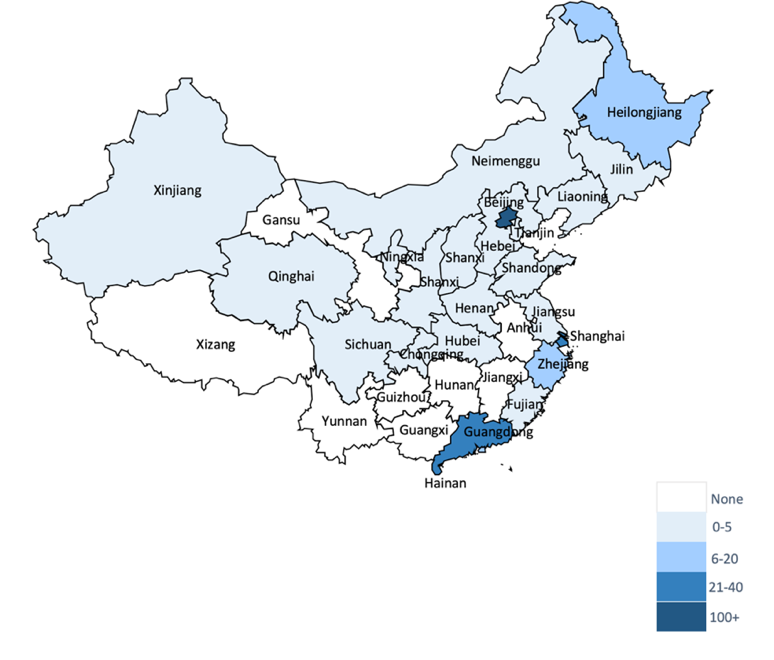
Figure 1. Locations of all participants on a map of Mainland China (n = 223).
Most respondents were women (72%). The majority were relatively young: 62.5% were aged 18–25 and 18.5% between 26 and 35, while older groups were less represented, with 8% aged 36–45, 9.5% aged 46–55 and only 1% over 55.
Educational backgrounds were diverse but centred largely in the arts and humanities. Over half (57%) had studied journalism or media, followed by literature, film and TV studies, and broadcasting (each 15%), and linguistics (10.5%). Only 6% reported having studied translation.
In terms of experience, 32% had less than one year of practice, while 59.5% had been involved for one to five years. Only 9% reported more than five years of experience, underscoring the relatively recent emergence of AD as a structured activity in China.
As for employment status, the vast majority (88%) were volunteers, with only a small number institutionally employed (4%) or working as freelancers (8%).
This overview focuses on aspects directly relevant to the present analysis. A more detailed exploration of describers’ backgrounds and entry pathways is reported separately (Liu et al., 2025), but is not required for the interpretation of the findings presented in this article. It is important to note that the geographical, demographic, and professional profile of the group may reflect the first author’s professional network, particularly connections to university-based AD initiatives.
3.2. Materials and procedure
This study employed an online survey based on a questionnaire developed by Zajdel et al. (2024b). That instrument was itself adapted from several established survey-based studies on translators and describers (e.g., ADLAB PRO, 2018; Ehrensberger-Dow et al., 2016; Piecychna, 2019; Ruokonen & Mäkisalo, 2018) and drawing on the Minnesota Satisfaction Questionnaire framework. To ensure comparability, the structure and wording of the questionnaire were retained as closely as possible.
The questionnaire was adapted to the Chinese context through a limited number of targeted changes, preserving comparability with the original instrument while ensuring contextual relevance. The main adaptation concerned the Working Conditions, where the questionnaire was extended to include respondents who provide AD voluntarily. Volunteer respondents were routed to parallel items corresponding to those used for paid describers, but phrased so as not to assume remunerated employment. This adjustment reflects the prominence of unpaid AD provision in Mainland China and enables comparison between volunteer and paid practitioners.
Item-level changes were limited to cases where the original wording did not reflect local organisational realities. References to ‘clients’ were reworded as ‘commissioners’ (e.g., ‘The clients/commissioners you work for’), and work-location options were expanded to include student dormitories (‘Where do you usually work?’). Several income-related items were retained for paid describers but omitted for volunteers, as they could not be meaningfully answered in unpaid AD contexts. These included, for example, items on income share derived from AD, income satisfaction, and influence over fees. For transparency, both the original questionnaire (Zajdel et al., 2024b) and the adapted versions are available via Zenodo (Jia et al., 2024), including English, Traditional Chinese and Simplified Chinese.
The final version of the questionnaire comprised 36 closed-ended and two open-ended questions across four sections: background information, working conditions, professional image, and job satisfaction.
The questionnaire was translated into simplified Chinese and tested through cognitive interviews with five Chinese describers, followed by a pilot study via Qualtrics. The final survey was available in both Simplified and Traditional Chinese to facilitate participation across regions.
The survey was disseminated through a targeted outreach campaign combining social media platforms (LinkedIn, X, WeChat) with email distribution via audio description organisations, including organisations and project teams such as the China Braille Library, the ‘Ever-Shining Cinema’ project at the Communication University of China, the Beijing Hongdandan Cultural Service Centre for the Visually Impaired, the Shanghai ‘Sound of Light’ Barrier-free Film and Television Culture Development Centre, the Shanghai Yier Information Technology Co., Ltd., the ‘Feeling Images through Your Heart’ project team of Guangdong Provincial Library, the Audio Description Association (Hong Kong), and Space for Acting (Macao), among others.
Ethical approval for the study was granted by the Ethics Committee of the University of Antwerp (SHW_2022_32_1). Data collection took place between May and October 2023.
3.3. Data analysis
The data were analysed using SPSS version 29. The primary goal of this study was twofold: to generate descriptive statistics and to identify statistically significant differences in professional image, job satisfaction, and working conditions among participant groups.
Inferential analyses were applied to survey items where meaningful group comparisons were warranted, focusing on two key independent variables:
Educational background: This variable reflects a key feature of China’s AD workforce, with 57% of participants reporting a background in journalism or media studies. Previous research indicates that AD in China is closely linked to educational environments and media-related disciplines (Wen & Yang, 2024; Yang et al., 2023), which may shape both working practices and professional self-perception. The variable was operationalised as a binary grouping: journalism/media studies versus other backgrounds.
Employment status: This variable captures a key structural divide between a small group of paid describers and a much larger volunteer base. It allows comparison of working conditions and job satisfaction between paid professionals (employed or freelance) and volunteers.
Group comparisons were conducted using the Mann–Whitney U test, appropriate for ordinal data and unequal group sizes. A Bonferroni correction was applied to control for Type I error (α = .05 divided by the number of comparisons per domain). Given the unbalanced groups, effect sizes were reported using the rank-biserial correlation coefficient (r), interpreted following Cohen’s thresholds: small (.10–.30), medium (.30–.50), and large (>.50).
4. Results
4.1. Professional image
To explore how participants perceive their professional status, we used a matrix question with six items (see Table 1), rated on a five-point scale from ‘to a very low degree or not at all’ to ‘to a very high degree,’ coded from 1 to 5.
Participants widely view AD as a creative practice. The statement ‘AD involves creativity’ received the highest mean score (M = 4.06). By contrast, ‘AD requires expert skills’ received a lower mean score (M = 3.08), indicating weaker agreement, pointing to ambivalence regarding the level of specialisation required.
| To what extent do you think: | Mean | Median |
|---|---|---|
| AD involves creativity? | 4.06 | 4.00 |
| AD is a prestigious job? | 3.96 | 4.00 |
| The work of an audio describer has an economic, political or social impact? | 3.54 | 4.00 |
| AD requires expert skills? | 3.08 | 3.00 |
| Audio describers are valued in society? | 2.74 | 3.00 |
| Audio describers are visible as a professional group in society? | 2.66 | 2.00 |
Table 1. Mean answers for questions on professional image.
Participants also acknowledge the broader value of their work, particularly its social impact (M = 3.54), but rated visibility and societal recognition lower. Describers do not feel that their contributions are publicly acknowledged. The items ‘Audio describers are valued in society’ and ‘Audio describers are visible as a professional group in society’ received the lowest mean scores (M = 2.74 and M = 2.66, respectively). These findings were echoed in open-ended responses. One professional describer noted:
In China, awareness of AD remains relatively low, and the commercialisation of the field is still in its early stages. Society at large has yet to fully recognise the essential role that AD plays in ensuring information accessibility6.
Another participant, this time a volunteer, reflected more broadly on the gap between internal motivation and external validation:
While AD has gained some attention from relevant authorities in China, its societal impact remains limited. The profession is still relatively unknown, with few practitioners and little visibility outside of specialised volunteer teams. I believe that increasing the recognition of this work among audiences beyond people with visual impairments could significantly enhance both public awareness and the professional recognition of describers7.
Perceptions of prestige within the AD field appear closely tied to disciplinary background. Participants with journalism and media studies backgrounds perceive their work as more socially valued (Mdn = 3) compared to those from other disciplines (Mdn = 2) (U = 5002.5, z = -2.43, p < 0.05).
4.2. Job satisfaction
Results on job satisfaction echo the earlier findings on professional image: while Chinese describers experience their work as socially meaningful and ethically fulfilling, they report limited institutional recognition and material security.
As shown in Table 2, respondents express the highest satisfaction in areas linked to moral alignment and public service. Being able to act according to one’s conscience (M = 4.38) and to help others (M = 4.27) rank highest, pointing to a strong sense of ethical purpose. As one volunteer explained:
I am simply very willing to participate in AD volunteer services. Although each event requires a significant amount of time and effort, the positive feedback and satisfaction from the audience make it all worthwhile. That's why I love what I do8.
| In my present job, this is how I feel about … | Mean | Median |
|---|---|---|
| Being able to do things that don't go against my conscience | 4.38 | 5.00 |
| The chance to do things for other people | 4.27 | 4.00 |
| The freedom to use my own judgement | 4.06 | 4.00 |
| The feeling of accomplishment I get from the job | 3.97 | 4.00 |
| The working conditions | 3.88 | 4.00 |
| The chance to work alone on the job | 3.83 | 4.00 |
| The chance to do different things from time to time | 3.83 | 4.00 |
| The chance to do something that makes use of my abilities | 3.78 | 4.00 |
| The chance to try my own methods of doing the job | 3.74 | 4.00 |
| My pay and the amount of work I do | 3.57 | 4.00 |
| The way my job provides for steady employment | 3.31 | 3.00 |
| The chance to be ‘somebody’ in the community | 3.09 | 3.00 |
Table 2. Mean answers for questions on job satisfaction.
In contrast, satisfaction is lowest for status and stability, namely ‘the chance to be somebody in the community’ (M = 3.09) and ‘steady employment’ (M = 3.31).
A closer look at employment status reveals further differences. Volunteers report slightly higher satisfaction than paid professionals on both moral and material indicators, including ‘the chance to do things for other people’ (U = 1932.5, p < .05, r = .15) and ‘my pay and the amount of work I do’ (U = 1800, p < .01, r = .18). However, only the latter remains significant after Bonferroni correction (α = .025), and effect sizes are small.
Among both employed and freelance describers, AD accounts for less than 25% of income for over half of the respondents (Table 3), and income satisfaction is low: one-third of employed describers and nearly half of freelancers expressed dissatisfaction (Table 4). While most had not seriously considered leaving the field, some reported doing so regularly (Table 5).
|
|
Frequency |
|---|---|---|
|
|
5 |
|
2 | |
|
2 | |
|
9 | |
|
|
9 |
|
2 | |
|
1 | |
|
5 | |
|
17 |
Table 3. Percentage of income from AD.
| Employment status |
|
Frequency |
|---|---|---|
| Employed professionals |
|
3 |
|
3 | |
|
3 | |
|
9 | |
| Freelancer professionals |
|
1 |
|
5 | |
|
5 | |
|
5 | |
|
1 | |
|
17 |
Table 4. Satisfaction with income level.
| Employment status |
|
Frequency |
|---|---|---|
| Employed professionals |
|
6 |
|
1 | |
|
1 | |
|
1 | |
|
9 | |
| Freelancer professionals |
|
12 |
|
4 | |
|
1 | |
|
17 |
Table 5. Frequency of considering leaving the field.
4.3. Working conditions
4.3.1. Working environments
The survey results suggest that describers in China often work in loosely structured and home-based settings. Remote work is the norm, with 67% of participants working from home. Reported work settings include dedicated home offices, student dormitories, libraries, and university classrooms.
Although these working environments are spatially dispersed, this does not mean that production is entirely individualised. While 55% of respondents report working alone, collaborative and feedback-based practices are present in some contexts, particularly among participants with media-related training. These respondents are more likely to engage in teamwork (U = 5057.5, z = -2.416, p < 0.05) and to receive regular feedback during production (U = 4903.5, z = -2.58, p < 0.05). This suggests that, in some university- or project-based initiatives, collaboration often takes the form of peer discussion, instructor guidance, mentorship, or project-level revision rather than a shared physical workspace (Chen & Liu, 2025).
However, such internal production feedback does not necessarily involve external stakeholders. Over half of respondents report little or no contact with clients or commissioners, and more than 80% rarely interact with blind or visually impaired audiences. Although 58% of professionals and 61% of volunteers report occasional feedback from users, regular interaction with end users remains rare across employment types. These findings indicate that Chinese describers may receive some internal feedback within production processes, while direct engagement with clients, commissioners, and blind or visually impaired audiences remains limited.
4.3.2. Autonomy and influence
Across five core dimensions of autonomy, working hours, client selection, task control, income, and output quality, respondents report a stratified experience. Volunteers report relatively high levels of self-direction, while formally employed respondents describe more limited control.
Time autonomy is the most flexible domain. Among volunteers, 42% report a high to very strong influence over their working hours. In contrast, nearly one-third of employed respondents report little or no control over their schedules.
Control over task content followed a similar pattern. Among volunteer-affiliated participants, 62% report significant influence over what they describe and how, compared to only 22% of employed professionals, who more often report working within externally defined instructions.
Autonomy over client selection and income is limited. Only a small portion of freelancers report full discretion in choosing clients, while the majority of professionals report little or no influence. Income negotiation is particularly constrained, with 62% of professionals reporting minimal control over earnings.
One area of relatively high autonomy is output quality, with 64% of participants reporting strong influence over the final product.
Alongside these dimensions of autonomy, perceptions of external recognition are mixed. A majority of respondents, 74%, report that clients or commissioners trust their work and consider it important. At the same time, 22% of professionals report feeling undervalued, the highest level of dissatisfaction across groups, while volunteers report recognition framed in terms of social contribution rather than professional status.
4.3.3. Quality of life
The quality of life shows moderate stress levels, with pressure concentrated more in workflow demands than in direct financial strain.
Deadline pressure emerged as the most consistent stressor, cited by 65% of respondents. This reflects the deadline-driven, project-based nature of AD work, which often prioritises speed over stability. Interactions with clients or commissioners were also a notable source of anxiety. In open-ended responses, several participants expressed concern over maintaining AD script quality under time constraints, suggesting that internal professional standards, even in informal settings, remain a significant source of pressure.
Financial stress was relatively low, with 15% of Chinese professionals identifying it as a major concern. This divergence reflects the fact that AD is often not a primary source of income. Although the questionnaire did not include a dedicated item on alternative income sources, several participants referred in open-ended responses to holding additional roles, such as teaching or library work, indicating that AD may be combined with other forms of employment.
At the same time, a substantial proportion of respondents were students or recent graduates, suggesting that their involvement in AD is often supported by educational affiliations (Gao & Chen, 2019; Zhao & Li, 2021). These conditions may contribute to relatively low financial pressure and enable participation in AD without immediate economic dependence.
Despite generally moderate stress levels, some respondents indicated uncertainty about long-term engagement in the field. As one participant noted, ‘AD adds social value to my CV, but after graduation, I’ll need a more “practical” job9.’
These findings suggest that while participation in AD is associated with relatively manageable stress levels, long-term sustainability as a primary professional activity remains uncertain.
5. Discussion
This section interprets the survey findings in relation to the current organisation of AD in Mainland China. More broadly, these findings need to be understood in light of how accessibility is positioned within evolving institutional frameworks, cultural understandings of disability, and disciplinary configurations. Together, these factors shape how describers experience their work, what they expect from it, and how they evaluate both voluntary and paid participation.
5.1. Job satisfaction and professional image
The findings indicate that AD in Mainland China is experienced primarily as meaningful and socially valuable work, but not as a stable or clearly recognised profession. Respondents reported the highest satisfaction with items related to moral value, including acting in line with one’s conscience, helping others, and feeling a sense of accomplishment, while satisfaction with public recognition and steady employment was considerably lower. This pattern is reinforced by perceptions of professional image: AD is widely seen as creative and socially important, yet describers do not feel visible or valued as a professional group. Together, these findings point to a clear gap between strong intrinsic commitment and weak external recognition.
This gap can be linked to the broader institutional context in which AD operates in China. Accessibility has gained increasing policy attention, but it is not yet consistently implemented as a regulated public obligation, and AD remains largely outside formal service provision structures (Liu, 2025; People’s Republic of China, 2020, 2023; World Intellectual Property Organisation, 2022; Xiao et al., 2025). As a result, provision remains fragmented and often organised through project-based, volunteer-driven, and university-based initiatives rather than stable service structures (Liu, 2023; Tor-Carroggio & Casas-Tost, 2020; Wen & Yang, 2024; Yang et al., 2023). This limits both public awareness of AD and the consolidation of its professional status.
The relatively weak professional recognition may also be related to the fragmented disciplinary positioning of AD in China, where it is not anchored in a single professional domain but distributed across different fields, particularly journalism, communication, and media studies (Jankowska & Liu, 2026; Liu et al., 2025). Such dispersion may hinder the development of shared professional standards and a cohesive professional identity.
A similar coexistence of high intrinsic motivation and relatively low perceived professional status has been observed in previous survey research using the same instrument (Zajdel et al., 2024b). While the European context is more institutionalised, pathways into the profession remain similarly diverse and fragmented. This suggests that neither the degree of institutionalisation nor the multiplicity of entry routes alone can explain the persistence of this tension. Even where formal structures and legal mandates are in place, recognition does not necessarily translate into broader societal visibility or professional status, which could indicate that accessibility work may remain undervalued beyond regulatory and professional configurations.
5.2. Volunteers and paid describers
The results further show that differences between volunteers and paid describers help explain how satisfaction is shaped by expectations. Volunteers reported slightly higher satisfaction than paid describers, particularly in relation to the perceived balance between effort and material return. In the Chinese context, this is best understood as perceived fairness within a voluntary or educational arrangement rather than satisfaction with remuneration, where the effort is evaluated against non-material rewards. When AD is framed as civic engagement or service-learning, intensive workloads may be experienced as acceptable or even status-affirming. By contrast, when the same activity is framed as paid work but offers limited compensation and continuity, dissatisfaction becomes more salient.
Survey responses indicate that paid AD work is often financially supplementary rather than a stable primary income. A minority of paid respondents also reported considering leaving the field, suggesting that commitment to AD can coexist with uncertainty about its viability as paid work at the current stage of professional consolidation. Some responses further suggest early signs of strain, indicating that even committed practitioners may begin to question the long-term sustainability of their engagement under such conditions. This pattern is consistent with a field in which provision remains largely organised through short-term projects and partial institutional support rather than sustained commissioning structures (Liu, 2025; Ma, 2020; Xiao et al., 2025).
This structural fragility is closely tied to the broader positioning of accessibility in China. Although disability policy has increasingly adopted rights-based language (United Nations Partnership on the Rights of Persons with Disabilities, 2023; Zhao & Zhang, 2018), access to culture may still be perceived as less urgent than education, employment, and income-related concerns (Chen, 2025; Li et al., 2022). Accessibility is also often framed as support for a minority group rather than as a condition of equal participation (Cui et al., 2019; Dauncey, 2020; Lin et al., 2024). In this context, AD may be regarded as socially valuable while remaining weakly recognised as a professional service. Comparable concerns about income, continuity, and sustainability have been reported in previous survey research (Zajdel et al., 2024a), suggesting that the tension between commitment and structural support is not unique to China, although it appears sharper in a less institutionalised setting.
5.3. Autonomy, collaboration, and organisational context
The patterns of autonomy and collaboration reflect the organisational settings in which AD is currently produced in Mainland China. Respondents reported relatively strong influence over output quality, especially in volunteer contexts where peer discussion, mentoring, supervision, and project-level revision are common (Chen & Liu, 2025; Gao, 2024; Liu et al., 2025). This may partly reflect the strong journalism and media profile of the sample, as these fields often emphasise collaborative production.
By contrast, paid describers reported less control over tasks, deadlines, and income, indicating a shift from internally coordinated work to externally defined conditions. Importantly, this reduction in autonomy is not accompanied by stronger employment stability or clearer career pathways. Professionalisation is therefore experienced as ambivalent: paid work brings greater external constraint without necessarily providing security or recognition.
Compared with previous survey findings (Zajdel et al., 2024a), where audio describers typically work alone, collaboration appears more prominent in the present sample. This should be read as a feature of the volunteer-heavy and project-mediated practices represented in the present sample, and as a pattern consistent with previous literature on university- and project-based AD initiatives in China (Chen & Liu, 2025; Liu, 2023; Tor-Carroggio & Casas-Tost, 2020; Yang et al., 2023).
At the same time, direct interaction with blind and visually impaired users remains limited across both volunteer and paid contexts, echoing previous survey research using the same instrument (Zajdel et al., 2024b). This suggests that limited user engagement may not be context-specific, but may reflect broader organisational barriers to participatory and user-centred accessibility practice.
Overall, the findings highlight a central tension in contemporary AD practice in Mainland China: while describers experience their work as morally meaningful, socially valuable, and creatively rewarding, this commitment is not matched by stable professional recognition or employment continuity, particularly in paid contexts. This tension is shaped by the interplay of fragmented institutional provision, evolving cultural understandings of accessibility, and the disciplinary and organisational configurations through which AD is currently developed. Rather than reflecting a single structural deficit, these findings suggest a more complex positioning of accessibility work, where social value is clearly articulated in practice but only partially supported by formal structures.
6. Conclusions
This article examined professional image, job satisfaction, and working conditions among audio describers in Mainland China through a large-scale survey of 223 practitioners. By focusing on describers’ own assessments of their work, it provides empirical evidence from a context that has so far been underrepresented in international research.
Overall, the study highlights a persistent tension in audio description practice in Mainland China: while practitioners experience their work as socially meaningful and rewarding, this commitment is not matched by stable professional recognition or employment continuity, particularly in paid contexts. Importantly, comparison with previous survey research (Zajdel et al., 2024a) suggests that this tension cannot be explained solely by the presence or absence of institutional frameworks. In more established contexts, where legal mandates and professional structures are in place, describers also report a gap between the perceived social value of their work and its broader recognition. This indicates that formalisation alone does not automatically translate into professional visibility or status. Rather than pointing to a single structural deficit, these findings open up broader questions about how accessibility itself is understood, valued, and integrated within cultural and social systems.
The findings also highlight a persistent gap between describers and end users, with limited regular interaction reported across both volunteer and professional contexts. The fact that this pattern is also observed in previous survey research (Zajdel et al., 2024a) suggests that it may reflect a broader structural issue in how accessibility is organised and practised, rather than a context-specific limitation. This raises important questions about the extent to which accessibility provision is genuinely user-centred in different institutional settings.
Beyond this overarching pattern, the study makes three main contributions. First, it offers a systematic account of how describers in China perceive the status, rewards, and constraints of their work. Second, it shows how these perceptions are shaped by a field that remains closely connected to volunteer initiatives and university-based structures (Ai, 2023; Chen & Liu, 2025; Liu et al., 2025; Tor-Carroggio & Casas-Tost, 2020). Third, by replicating and contextually adapting an established survey instrument (Zajdel et al., 2024b), the study enables cautious comparison with previous survey-based research and contributes to broader discussions of accessibility, labour and professionalisation across different institutional settings.
These conclusions should be interpreted with caution. The sample is geographically uneven and partly shaped by the authors’ outreach networks, and the number of paid describers remains relatively small, which limits the precision of subgroup comparisons.
Future research could build on this baseline by expanding sampling beyond the most visible networks, increasing coverage of paid describers across regions and media sectors, and combining survey data with organisational case studies. Integrating user-centred perspectives would also help clarify how working conditions shape opportunities for sustained engagement with blind and visually impaired audiences. Together, such approaches would support a more comprehensive understanding of how audio description in China develops as a professional activity.
Acknowledgements
We would like to sincerely thank all participants who dedicated their time to completing the questionnaire and who helped disseminate it within their professional networks. We are also grateful to Huihuang Jia for his contribution to the development of the adapted questionnaire, and to Professor Ching Lin Pang for her support in polishing the final version of the instrument.
This study is supported by the China Scholarship Council (Grant No. 202207050044) and by the Youth Fund for Humanities and Social Sciences Research of the Ministry of Education of China, under the project ‘Enhancing the Social Participation Capacity of Persons with Visual Impairments from the Perspective of Media Accessibility’ (Grant No. 22YJC860004).
References
ADLAB PRO. (2018). IO2 report: Audio description professional: Profile definition. https://www.adlabpro.eu/wp-content/uploads/2018/04/IO2-REPORT-Final.pdf
Ai, Q. (2023). Barrier-free film screening in China: Awareness, practice and suggestions. Disability & Society, 38(10), 1958–1962. https://doi.org/10.1080/09687599.2023.2205994
Cao, P., Eriss, A., Jomhouri, F., Ghaffari, M. R., Kaur Mehar Singh, M., & Khoshsaligheh, M. (2025). Neutral and emotive styles of audio description: A reception case study. Humanities and Social Sciences Communications, 12, Article 894. https://doi.org/10.1057/s41599-025-05201-3
Chen, M. (2025). A life course perspective on disability: Education-to-work transitions of people with visual impairments in China. Frontiers in Sociology, 10, Article 1627946. https://doi.org/10.3389/fsoc.2025.1627946
Chen, X. (陈欣钢), & Liu, D. (刘丁香). (2025). Kechixu de shehui chuangxin: ‘Guangming Yingyuan’ wuzhang’ai chuanbo de xingdongzhe wangluo goujian (可持续的社会创新:’光明影院’无障碍传播的行动者网络构建) [Sustainable social innovation: Constructing an actor–network for accessible communication in ‘Ever-Shining Cinema’]. Xiandai Chuanbo (Zhongguo Chuanmei Daxue Xuebao) (现代传播(中国传媒大学学报)) [Modern Communication (Journal of Communication University of China)], 47(6), 119–127. https://doi.org/10.19997/j.cnki.xdcb.2025.06.013
Cui, F., Cong, C., Qiaoxian, X., & Chang, X. (2019). Equal participation of persons with disabilities in the development of disability policy on accessibility in China. International Journal of Developmental Disabilities, 65(5), 319–326. https://doi.org/10.1080/20473869.2019.1664842
Dauncey, S. (2020). Backstage to centre stage: New heroes in the age of reform. In S. Dauncey (Ed.), Disability in contemporary China: Citizenship, identity and culture (pp. 62–85). Cambridge University Press. https://doi.org/10.1017/9781316339879.003
Ehrensberger-Dow, M., Heeb, A. H., Massey, G., Meidert, U., Neumann, S., & Becker, H. (2016). An international survey of the ergonomics of professional translation. ILCEA: Revue de l’Institut des langues et cultures d'Europe, Amérique, Afrique, Asie et Australie, 27. https://doi.org/10.4000/ilcea.4004
European Union. (2010). Directive 2010/13/EU of the European Parliament and of the Council on the coordination of certain provisions concerning the provision of audiovisual media services (Audiovisual Media Services Directive). Official Journal of the European Union. https://eur-lex.europa.eu/legal-content/EN/TXT/?uri=celex%3A32010L0013
European Union. (2019). Directive (EU) 2019/882 of the European Parliament and of the Council on the accessibility requirements for products and services (European Accessibility Act). Official Journal of the European Union. https://eur-lex.europa.eu/legal-content/EN/TXT/?uri=CELEX:32019L0882
Fu, H. (付海钲), & Pan, Y. (潘悦). (2022). Beijing, lujing yu moshi: Zhongguo wuzhang’ai xinxi chuban yu chuanbo de fazhan tansuo (背景、路径与模式:中国无障碍信息出版与传播的发展探索) [Background, path and model: Exploring the development of barrier-free information publishing and communication in China]. Zhongguo Xinwen Chuanbo Yanjiu (中国新闻传播研究) [China Journalism and Communication Journal], 6, 145–154.
Fundacja Ari Ari, & Fundacja Otwieramy Kulturę i Sztukę. (2022). Zawód audiodeskryptor: Konsultant audiodeskrypcji z niepełnosprawnością wzroku [The profession of audio describer: Audio description consultant with visual impairment]. Fundacja Ari Ari oraz Fundacja Otwieramy Kulturę i Sztukę.
Gao, S. (高森). (2024). Xinli de guangying: Wuzhang’ai dianying de lilun jiangou yu yingyong yanjiu (心理的光影:无障碍电影的理论建构与应用研究) [Light and shadow of the mind: Theoretical construction and applied research on accessible films]. Zhongguo Xiju Chubanshe.
Gao, X. (高晓虹), & Chen, X. (陈欣钢). (2019). Guangming Yingyuan: Wuzhang’ai shiting chuanbo de yanjiu yu shijian (光明影院:无障碍视听传播的研究与实践) [Ever-Shining Cinema: Research and practice on barrier-free audiovisual communication]. Zhongguo Bianji (中国编辑) [Chinese Editorials], 3, 4–7, 25.
Jankowska, A., & Liu, Q. (刘琦). (2026). Zhongguo wuzhang’ai dianying yanjiu de lingyu jiegou yu fazhan qushi: Jiyu wenxian jiliang de fenxi (中国无障碍电影研究的领域结构与发展趋势:基于文献计量的分析) [The field structure and development trends of audio description research in China: A bibliometric analysis]. Xinwen Chuanbo Xuekan (新闻传播学刊) [Journal of Journalism and Communication], 3(2), 26–40.
Jankowska, A., & Walczak, A. (2019). Audio description for films in Poland: History, present state and future prospects. The Journal of Specialised Translation, 32, 236–261. https://doi.org/10.26034/cm.jostrans.2019.162
Jia, H., Jankowska, A., Liu, Q., & Pang, C. L. (2024). Working conditions, professional image and job satisfaction of audio describers in Mainland China, Hong Kong, Macao and Taiwan: Questionnaire [Questionnaire]. Zenodo. https://doi.org/10.5281/zenodo.11121934
Li, X. H., Xu, S. Q., & Hu, L. J. (2022). Protection or restriction: An analysis of the blind massage policy for employment rights of persons with visual impairments in China. Journal of Visual Impairment & Blindness, 116(1), 85–95. https://doi.org/10.1177/0145482X211073611
Lin, Z., Zhong, Y., & Yang, L. (2024). What’s in a news image? Framing people with disabilities in the changing society of China. Disability & Society, 39(6), 1465–1483. https://doi.org/10.1080/09687599.2022.2143325
Liu, Q. (刘琦). (2025). Cong shiyan dao zhidu qudong: Oumei guojia wuzhang’ai dianying de lishi yanjin kaocha (从实验到制度驱动:欧美国家无障碍电影的历史演进考察) [From experimentation to institutionalisation: A historical examination of audio description in Western countries]. Zhongguo Xinwen Chuanbo Yanjiu (中国新闻传播研究) [China Journalism and Communication Journal], 2, 274–285.
Liu, Q., Jia, H., Pang, C. L., & Jankowska, A. (2025). Audio describers in Mainland China: Insights from a survey of emerging professionals and unique practices. Między Oryginałem a Przekładem, 31(3), 53–77. https://doi.org/10.12797/MOaP.31.2025.69.04
Liu, Y. (2023). Journey to the East: What is happening in the Chinese audio description (AD) world? An interview-based study. Hermēneus: Revista de Traducción e Interpretación, 25, 169–194. https://doi.org/10.24197/her.25.2023.169-194
Liu, Y., Casas-Tost, H., & Rovira-Esteva, S. (2022). Made in China versus made in Spain: A corpus-based study comparing AD in Chinese and Spanish. The Journal of Specialised Translation, 38, 180–207. https://doi.org/10.26034/cm.jostrans.2022.088
Ma, W. (马卫). (2020). Wuzhang’ai dianying: Xiang shan xiang mei zhi lu (无障碍电影:向善向美之路) [Barrier-free films: The road to goodness and beauty]. Shanghai Renmin Chubanshe.
Machuca, M. J., & Matamala, A. (2022). Neutral voices in audio descriptions: What does it mean? Babel, 68(5), 668–696. https://doi.org/10.1075/babel.00287.mac
Moorkens, J. (2020). Comparative satisfaction among freelance and directly-employed Irish-language translators. The International Journal of Translation and Interpreting Research, 12(1), 55–73. https://doi.org/10.12807/ti.112201.2020.a04
Pavesi, M., & Perego, E. (2006). Profiling film translators in Italy: A preliminary analysis. The Journal of Specialised Translation, 6, 99–114. https://doi.org/10.26034/cm.jostrans.2006.741
People’s Republic of China. (2020). Copyright Law of the People’s Republic of China. https://www.gov.cn/guoqing/2021-10/29/content_5647633.htm
People’s Republic of China. (2023). Law of the People’s Republic of China on Building Accessible Environments. https://www.gov.cn/yaowen/liebiao/202306/content_6888910.htm
Perego, E. (2022). The audio description professional: A sociological overview and new training perspectives. In C. Taylor & E. Perego (Eds.), The Routledge Handbook of Audio Description (pp. 265–279). Routledge.
Piecychna, B. (2019). Polish sworn translators’ attitudes towards the job they perform: Results obtained from a job satisfaction survey. Studies in Logic, Grammar and Rhetoric, 58(1), 125–154. https://doi.org/10.2478/slgr-2019-0020
Rai, S., Campbell, M., Caprezzera, A., Gutman, L., & Matos Olivares, N. (2024, November 13–15). Panel discussion: Audio description fireside chat [Panel discussion]. Languages & The Media 2024. https://www.languages-media.com/conference/programme-2024
Remael, A., Reviers, N., & Vercauteren, G. (2015). Pictures painted in words: ADLAB audio description guidelines. EUT Edizioni Università di Trieste.
Romero Fresco, P., & Dangerfield, K. (2022). Accessibility as a conversation. Journal of Audiovisual Translation, 5(2), 15–34. https://doi.org/10.47476/jat.v5i2.2022.228
Ruokonen, M., & Mäkisalo, J. (2018). Middling-status profession, high-status work: Finnish translators’ status perceptions in the light of their backgrounds, working conditions and job satisfaction. Translation and Interpreting, 10(1), 1–17. https://doi.org/10.12807/ti.110201.2018.a01
Ruokonen, M., & Svahn, E. (2021). Comparative research into translator status: Finland and Sweden as a case in point. Perspectives: Studies in Translation Theory and Practice, 30(5), 859–875. https://doi.org/10.1080/0907676X.2021.1953546
Silvester, H. (2022). Working conditions and collaborative practices in the translation of French film: Subtitling banlieue cinema. Perspectives: Studies in Translation Theory and Practice, 30(3), 399–414. https://doi.org/10.1080/0907676X.2021.1903517
Snyder, J. (2022). Audio description in the United States. In C. Taylor & E. Perego (Eds.), The Routledge handbook of audio description (pp. 531–543). Routledge.
Su, Y., & Yang, L. (2025). Barriers to barrier-free films for people with visual impairments: A case in China. Disability & Society. Advance online publication. https://doi.org/10.1080/09687599.2025.2558550
Tor-Carroggio, I. (2020). T(ime) t(o) s(tart) synthesising audio description in China? Results of a reception study. The Journal of Specialised Translation, 34, 171–191. https://doi.org/10.26034/cm.jostrans.2020.142
Tor-Carroggio, I., & Casas-Tost, H. (2020). Who is currently audio describing in China? A study of Chinese audio describer profiles. MonTI: Monographs in Translation and Interpreting, 12, 78–107. https://doi.org/10.6035/MonTI.2020.12.03
Tor-Carroggio, I., & Vercauteren, G. (2020). When East meets West: A comparison of audio description guidelines in China and Europe. Hikma, 19(1), 167–186. https://doi.org/10.21071/hikma.v19i1.12197
United Kingdom. (2003). Communications Act 2003. https://www.legislation.gov.uk/ukpga/2003/21/contents
United Kingdom. (2010). Equality Act 2010. https://www.legislation.gov.uk/ukpga/2010/15
United Nations Partnership on the Rights of Persons with Disabilities. (2023). Situational analysis of the rights of persons with disabilities in China. https://unprpd.org/new/wp-content/uploads/2023/12/CR-China-2023-70a.pdf
United States. (2010). Twenty-First Century Communications and Video Accessibility Act. https://www.congress.gov/bill/111th-congress/senate-bill/3304
Wen, Y. (问永刚), & Yang, L. (杨丽萍). (2024). Wuzhang’ai shiting gonggong fuwu de Zhongguo moshi chuangxin: Jiyu ‘Guangming Yingyuan’ Zhongguo Guangdian gongyi dianbo zhuanqu de yanjiu (无障碍视听公共服务的中国模式创新——基于’光明影院’中国广电公益点播专区的研究) [Innovation of the Chinese path to barrier-free audio-visual public services: Research based on the ‘Ever-Shining Cinema’ China Broadnet public welfare on-demand area project]. Xinwen Chuanbo Xuekan (新闻传播学刊) [Journal of Journalism and Communication], 1(4), 11–16.
World Intellectual Property Organisation. (2022). Marrakesh Notification No. 87: Ratification by the People’s Republic of China. https://www.wipo.int/wipolex/en/treaties/notifications/details/treaty_marrakesh_87
Wu, W. (吴炜华), Wang, N. (王念), & Gao, Y. (高胤丰). (2020). Wuzhang’ai yingshi de xinshidai tupu: Leixing qushi, yanjiu lujing yu Zhongguo moshi (无障碍影视的新时代图谱:类型趋势、研究路径与中国模式) [The new-era image of barrier-free film and television: Genre trends, research approaches and the Chinese model]. Zhongguo Xinwen Chuanbo Yanjiu (中国新闻传播研究) [China Journalism and Communication Journal], 1, 11–18.
Wu, Z. (吴宗艺), & Xie, Z. (谢桢桢). (2015). Zhongguo shizhang koushu yingxiang fuwu de fazhan xianzhuang yu dalu tuiguang (中国视障口述影像服务的发展现状与大陆推广) [The development and the promotion of audio description in Mainland China]. Xinwen Yanjiu Daokan (新闻研究导刊) [Journal of News Research], 6(10), 20–21, 34.
Xiao, W., Li, Y., & Zhu, B. (2025). From policy to practice: Transforming audio description in China. Journal of Visual Impairment & Blindness, 119(6), 473–494. https://doi.org/10.1177/0145482X251399658
Yan, J. X., & Luo, K. (2024). Assessment criteria in audio describer training: An investigation of learner perceptions in a university interpreting programme in Hong Kong of China. Interpreting and Society, 4(1), 26–43. https://doi.org/10.1177/2752381023119335
Yang, H., Shen, W., Liu, B., & Wang, Y. (2023). A pilot study on the availability and reception of audio description in the Chinese Mainland. Frontiers in Communication, 8, Article 1114853. https://doi.org/10.3389/fcomm.2023.1114853
Zajdel, A., Jankowska, A., & Schrijver, I. (2024a). What goes on behind the scenes? Exploring status perceptions, working conditions and job satisfaction of audio describers. Perspectives: Studies in Translation Theory and Practice, 33(3), 1–17. https://doi.org/10.1080/0907676X.2023.2297245
Zajdel, A., Jankowska, A., & Schrijver, I. (2024b). Working conditions, professional image and job satisfaction of audio describers: Questionnaire [Questionnaire]. Zenodo. https://doi.org/10.5281/zenodo.10913041
Zhao, X., & Zhang, C. (2018). From isolated fence to inclusive society: The transformational disability policy in China. Disability & Society, 33(1), 132–137. https://doi.org/10.1080/09687599.2017.1375246
Zhao, X. (赵希婧), & Li, C. (李超鹏). (2021). Wuzhang’ai shiting chuanbo de shijian chuangxin yu fazhan qushi: Yi ‘Guangming Yingyuan’ xiangmu wei li (无障碍视听传播的实践创新与发展趋势——以’光明影院’项目为例) [Practical innovation and development trends of barrier-free audiovisual communication: Taking the ‘Ever-Shining Cinema’ project as an example]. Qingnian Jizhe (青年记者) [Youth Journalist], 7, 70–72. https://doi.org/10.15997/j.cnki.qnjz.2021.07.030
Data availability statement
The questionnaire instruments used in this study, in English, Simplified Chinese and Traditional Chinese, are openly available on Zenodo at https://doi.org/10.5281/zenodo.11121934 (Jia et al., 2024). The survey response data are not publicly available owing to the ethical and privacy conditions of participant consent but are available from the corresponding author on reasonable request.
Notes
* https://orcid.org/0009-0008-7304-8597, email: baalq@cuc.edu.cn↩︎
** https://orcid.org/0000-0001-6863-5940, email: anna.jankowska@uantwerpen.be↩︎
Responses from Hong Kong, Macao, and Taiwan were excluded due to their small number and distinct regional contexts, which limited their quantitative relevance. However, we consider these understudied regions valuable and plan to explore their data in a separate, qualitative study.↩︎
At present, it is not possible to estimate the total population of audio describers in Mainland China due to the absence of national registries, certification systems, or limited professional associations. Previous empirical studies in the Chinese context have relied on substantially smaller samples (e.g., Tor-Carroggio & Casas-Tost, 2020; Liu, 2023). To maximise reach across regions and professional profiles, the survey was disseminated widely through multiple online platforms and professional networks, as detailed in Section 3.2.↩︎
This figure is based on the same survey dataset as reported in our earlier paper (Liu et al., 2025) and is reproduced here to provide sample context for the analyses presented in this article.↩︎
Original Chinese texts: 在中国,大众对口述影像的认知仍较为有限,行业商业化尚处于起步阶段,社会尚未充分意识到口述影像在实现信息无障碍中的核心作用。↩︎
Original Chinese texts: 虽然近年来口述影像在相关部门中逐渐获得关注,但其整体社会影响仍然有限。从业者数量稀少,社会能见度低,主要集中在特定的志愿服务团队中。我认为,应当进一步扩大口述影像在非视障群体中的影响力,提升其公共认知度和职业认同。↩︎
Original Chinese texts: 我非常愿意参与口述影像的志愿服务,虽然每次活动都很耗时耗力,但观众的积极反馈和满意让我觉得一切都值得,这就是我热爱这份工作的原因。↩︎
Original Chinese texts: 口述影像为我的简历增加了社会价值,但毕业后我需要一份更‘现实’的工作。↩︎